
A latest study by the Bank of Korea points out that as global cryptocurrency trading platforms gradually open up direct purchases of stablecoins with fiat currencies, market demand for U.S. dollar-backed stablecoins may be transmitted to local exchange rates through the foreign exchange market, increasing pressure on the depreciation of domestic currencies.
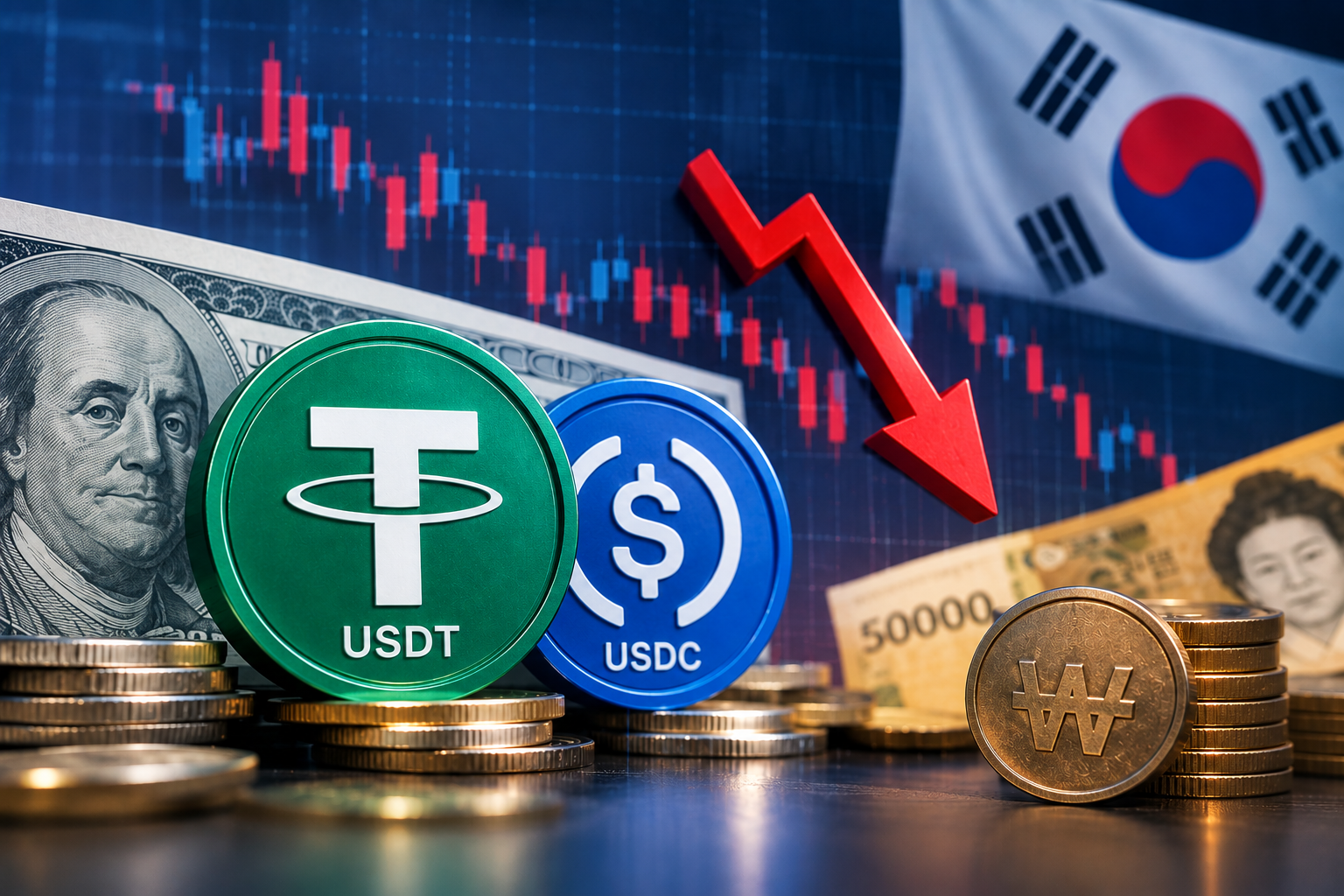
The study was conducted by Bank of Korea researchers Jihyun Kim and Sangheum Cho, focusing on market changes after Binance opened direct trading between fiat currencies and stablecoins. Taking currencies such as the Brazilian real as examples, the study examines the effects after direct trading between these currencies and dollar-pegged stablecoins USDT and USDC.
With the launch of the relevant trading pairs, investors can directly use local fiat currencies to purchase stablecoins, while professional market makers are responsible for supplying these tokens to the market. Since market makers need to hedge their own positions, their trading activities may be further transmitted to the traditional foreign exchange market, namely selling local currencies and buying U.S. dollars.
As a result, changes in demand in the stablecoin market may have an actual impact on local currency exchange rates through market makers' foreign exchange operations.
The study shows that after Binance launched fiat-stablecoin trading pairs, the stablecoin premium in local markets fell by approximately 0.33 to 0.38 percentage points. At the same time, when local market prices were higher than Binance's quoted prices, stablecoins were more likely to flow from Binance to local exchanges.
At the time these research findings were released, the scale of stablecoin trading in South Korea was rapidly expanding. Data show that during the 12 months through June 2025, the value of stablecoin transactions conducted by South Korean investors using the Korean won reached $64 billion, making South Korea the country with the largest stablecoin market in the Asia-Pacific region denominated in local currency. The data came from Chainalysis.
For the South Korean market, this finding also has potentially important significance. The researchers pointed out that if South Korea further relaxes relevant regulations in the future, allowing more companies and foreign capital to enter the cryptocurrency market, the connection between stablecoins and traditional currency markets may become further strengthened.
The study believes that deeper liquidity in the foreign exchange market, as well as more widespread use of the Korean won in overseas markets, can help the market better absorb related shocks.
The researchers also found that the impact brought by stablecoins is not limited to the cryptocurrency market itself. For currencies that have already established Binance fiat-stablecoin trading pairs, there is an association between increased buying pressure for stablecoins and depreciation of local currencies.
The South Korean market presents a different situation. Since Binance does not provide a direct Korean won-stablecoin trading pair, the relevant exchange rate did not show significant fluctuations, and the increased buying pressure for stablecoins was mainly reflected in an expansion of the local South Korean stablecoin premium.
In another analysis based on weekly data, the researchers used Bitcoin Google search volume as a proxy indicator of cryptocurrency investment demand. The results show that when this indicator increases by one standard deviation, the Brazilian real depreciates by 0.118%, while the stablecoin premium in the Brazilian market rises by 0.109 percentage points.
The study covered a total of 12 currencies with sufficient cross-exchange data, with the sample period spanning 2019 to 2025.