
The cryptocurrency market is a dynamic and ever-evolving landscape. As we move into 2026, the projects that defined previous cycles may give way to new innovations and market leaders. For investors in Vietnam, simply following yesterday's trends is not a winning strategy. To succeed, you must develop a systematic process for identifying the most promising assets. Creating your own list of top 10 crypto investments is not just an exercise; it is a critical strategic process that forces you to research, analyze, and build conviction.
This comprehensive guide will show you exactly how to build a robust framework for identifying and ranking cryptocurrencies. We will move beyond simple hype and provide a step-by-step method for analyzing fundamentals, evaluating tokenomics, and assessing market narratives. By the end of this article, you will have the tools to create your own personalized list of top 10 crypto investments for 2026, empowering you to invest with confidence and clarity.
Why You Need to Create Your Own Top 10 List
In the world of crypto, you will find countless "Top 10" lists published by influencers and media outlets. While these can be a starting point for ideas, they are often subjective, biased, or quickly outdated. Relying solely on others' opinions is a passive approach to investing. Building your own list, however, is an active process that offers several distinct advantages:
- Deepen Your Knowledge: The process forces you to dive deep into project whitepapers, team backgrounds, and community discussions. This builds a foundational understanding that is far more valuable than any "hot tip."
- Develop Conviction: When you have done the research yourself, you will have the conviction to hold through market volatility. You will understand the long-term value proposition, preventing you from panic-selling during downturns.
- Customize to Your Goals: Your financial goals, risk tolerance, and time horizon are unique. Your top 10 list should reflect that. A list built for a long-term, low-risk investor will look very different from one built for an active DeFi trader.
- Identify Hidden Gems: By developing your own analytical framework, you can spot promising projects before they become mainstream, offering the potential for much higher returns.
In 2026, the market will be more mature and complex than ever before. A disciplined, research-driven approach is essential. Let’s build the framework to help you do just that.
Step 1: Define Your Investment Thesis and Criteria
Before you can rank any cryptocurrency, you must first define the criteria you will be judging them against. This starts with your personal investment thesis—a clear statement of your beliefs about where the market is headed and where you see the most significant opportunities for growth.
Establish Your Macro Outlook
What are the big-picture trends you believe will define the crypto market in 2026? Your thesis could be centered around several narratives, such as:
- Layer 2 Dominance: A belief that the future of blockchain scalability lies in Layer 2 solutions, making them a prime investment area.
- The Rise of Real-World Assets (RWAs): A thesis that tokenizing real-world assets like real estate and private credit will be the next major growth driver.
- Decentralized Social (DeSo): A conviction that users will migrate away from centralized social media to platforms that offer ownership and censorship resistance.
- GameFi 2.0: A belief that the next generation of blockchain games will focus on high-quality gameplay and sustainable economies, attracting mainstream gamers.
Your thesis will act as a filter, helping you narrow down the vast universe of cryptocurrencies to a manageable number of potential candidates.
Set Your Core Evaluation Criteria
Once you have your macro thesis, create a scorecard of specific criteria to evaluate each project. This ensures your analysis is consistent and objective. Key criteria should include:
- Problem-Solving: Does the project solve a real, significant problem? Is a decentralized solution truly necessary and superior to a centralized one?
- Technology and Innovation: Is the technology robust, secure, and innovative? Does it have a clear advantage over its competitors?
- Team and Backing: Is the team experienced, transparent, and capable of executing its vision? Are they backed by reputable investors?
- Tokenomics: Does the token have clear utility and a well-designed economic model that captures value for holders?
- Community and Ecosystem: Is there a vibrant, growing community of users and developers building on the platform?
Creating a list of top 10 crypto investments for beginners might involve weighting "Team and Backing" more heavily, while a list for advanced users might focus more on "Technology and Innovation."
Step 2: The Research Funnel – From Broad to Specific
With thousands of cryptocurrencies available, you need a systematic way to filter them down. The research funnel is a multi-stage process that starts broad and becomes progressively more focused.
Stage 1: Broad Market Scanning
At this stage, your goal is to identify a large pool of potential candidates. Use market data aggregators and research platforms to scan the market based on high-level metrics. You can screen for projects based on:
- Sector: Filter by categories that align with your investment thesis (e.g., DeFi, GameFi, Infrastructure).
- Market Capitalization: You might choose to focus on established large-caps, up-and-coming mid-caps, or high-risk small-caps.
- Developer Activity: Look for projects with high and consistent levels of development activity, which can be a strong indicator of a dedicated team.
This initial scan should give you a list of 50-100 projects that are worth a closer look. Platforms like HIBT are essential at this stage, providing a comprehensive overview of the market with detailed information on hundreds of assets, which helps streamline your initial screening process.
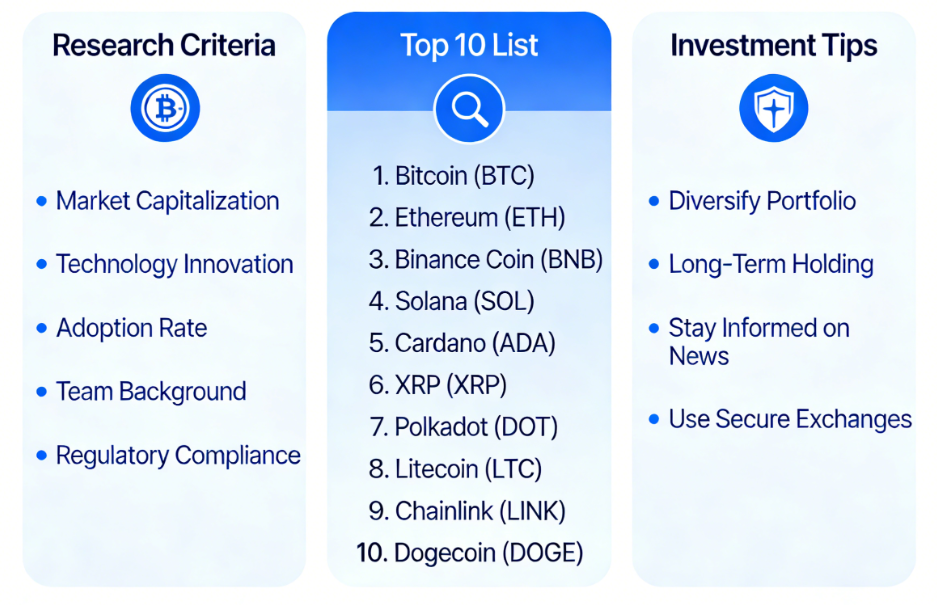
Stage 2: Fundamental Analysis
Now, take your shorter list and begin a deep dive into the fundamentals of each project. This is the most time-consuming but also the most crucial part of the process. For each project, you must:
- Read the Whitepaper: This document is the project's constitution. It should clearly explain the technology, the problem it solves, and the long-term vision. If you cannot understand the whitepaper, or if it is filled with vague marketing buzzwords, that is a major red flag.
- Analyze the Team: Investigate the founders and core developers. Look at their LinkedIn profiles, previous projects, and academic publications. An anonymous team is not an automatic disqualifier, especially in a privacy-focused project, but it does add a layer of risk.
- Evaluate the Technology: You do not need to be a programmer to assess the technology. Look for signs of progress like a functioning testnet or mainnet, a clear roadmap with completed milestones, and third-party security audits.
Case Study: Analyzing a New Layer 1 Project
An investor in Ho Chi Minh City is creating a list of top 10 crypto investments with a thesis focused on modular blockchains. She identifies a new Layer 1 project that claims to offer superior scalability.
Her fundamental analysis involves:
- Reading the whitepaper to understand its unique consensus mechanism and how it differs from existing solutions.
- Researching the team, discovering they are former engineers from top tech companies with published research on distributed systems.
- Checking their GitHub repository, where she sees consistent code commits and active discussions, indicating a healthy and ongoing development process.
- This thorough analysis gives her confidence that the project has strong fundamentals, and she moves it to the next stage of her research funnel.
Step 3: Deep Dive into Tokenomics and Value Accrual
A great project with bad tokenomics can be a poor investment. Tokenomics is the science of a token's economy. Your analysis must answer one key question: "How does this token capture the value created by the protocol?"
Assess Token Utility and Demand
The token must have a clear and essential purpose within the ecosystem. Is it used for:
- Paying for network fees? (Like ETH on Ethereum)
- Securing the network through staking? (Like SOL on Solana)
- Governing the protocol? (Like UNI for Uniswap)
The more integral the token is to the platform's function, the more organic demand there will be for it as the network grows.
Analyze Token Supply and Distribution
- Supply Dynamics: Is the total supply fixed (deflationary pressure) or inflationary? If it is inflationary, is the inflation rate reasonable and used for productive purposes like funding development or staking rewards?
- Distribution Schedule: Look at the vesting schedule for team and investor tokens. A project that unlocks a large percentage of its supply in the near future could face significant selling pressure. A long vesting schedule aligns the incentives of the team and investors with the long-term success of the project.
This is a key part of how to rank cryptocurrencies in Vietnam or anywhere else in the world. A project that allocates 50% of its tokens to the team and insiders is a much riskier bet than one that allocates 50% to a community-governed treasury.
Step 4: Evaluate the Community and Ecosystem
In Web3, a project's community is its lifeblood. A strong and engaged community provides a powerful network effect and is one of the most durable competitive advantages.
Gauge Community Health
- Join the Conversation: Spend time in the project's Discord and Telegram channels. Are the discussions intelligent and focused on the product, or are they solely about price speculation? Is the team actively engaging with the community and answering questions?
- Check Social Metrics: Look at their Twitter followers and engagement rates. A large number of followers with very little engagement could be a sign of fake accounts.
- Look for Organic Growth: Is the community growing because of genuine interest in the project, or is it driven by unsustainable airdrop farming or marketing hype?
Assess Ecosystem Vitality
A healthy ecosystem has a growing number of developers and projects building on top of it.
- dApp Landscape: How many decentralized applications are being built on the platform? Are they high-quality and attracting users?
- Developer Support: Does the project have a grant program or other initiatives to attract and support developers?
- Partnerships: Are they forming meaningful partnerships that expand the utility and reach of their platform?
Executing your investment decisions requires a platform that is not only secure but also deeply integrated into these ecosystems. HIBT offers seamless access to a wide array of tokens from leading ecosystems, ensuring that when you decide to invest, the process is efficient and reliable. Our commitment to security means you can focus on your research, knowing your assets are protected.
Step 5: Synthesize, Rank, and Create Your List
You have now gathered a wealth of quantitative and qualitative data. The final step is to synthesize this information and rank your shortlisted projects to create your list of top 10 investments.
The Scoring System
Return to the criteria you defined in Step 1 and create a simple scoring system. You could rank each project on a scale of 1 to 10 for each category:
- Technology (1-10)
- Team (1-10)
- Tokenomics (1-10)
- Community (1-10)
- Alignment with Your Thesis (1-10)
This scoring system provides a structured way to compare different projects. While it is still subjective, it forces you to justify your decisions and makes your ranking process more transparent and logical.
Construct Your Final List
Based on your total scores, assemble your list. This is your personal list of top 10 crypto investments for 2026. Remember, this list is not static. The market is constantly changing, and your list should be a living document. Plan to review and update it quarterly, or whenever significant market events occur.
Case Study: Finalizing a Top 10 List
An experienced investor in Hanoi has completed her research on 20 promising projects. She uses her scoring system to rank them.
- A DeFi protocol with innovative technology but an anonymous team gets a high score for "Technology" but a low score for "Team."
- An established Layer 1 with a huge community but slower innovation gets a high score for "Community" but a medium score for "Technology."
After scoring all 20, she identifies the 10 with the highest overall scores. She then decides on her portfolio allocation, assigning a larger percentage to the top-ranked projects she has the most conviction in. This disciplined approach is central to the best crypto investment strategies for 2026.
Conclusion
Creating a list of top 10 crypto investments is one of the most empowering actions you can take as an investor. It forces you to move beyond hype and develop a deep, fundamental understanding of the projects you are putting your capital into. This process of rigorous research, analysis, and strategic ranking will give you the knowledge and conviction needed to navigate the crypto markets of 2026 and beyond.
The future of finance is being built on decentralized rails, and the opportunities for those who do their homework are immense. For the vibrant community of investors in Vietnam, this framework provides a clear path to making informed and strategic decisions. As you embark on this journey of discovery and investment, having a secure and reliable partner is crucial. With its robust security and user-friendly platform, HIBT is committed to providing you with the tools and access you need to confidently act on your research.
About the Author
Dr. Minh Pham is a distinguished computer scientist specializing in distributed network security and cryptographic protocols. He is the author of over 90 peer-reviewed papers on blockchain architecture and has been a keynote speaker at major international technology conferences. Dr. Pham has led the formal security audits for several of the world's most recognized Layer 1 blockchain projects, securing their core infrastructure against complex threats. He is a passionate advocate for digital sovereignty and is committed to making Web3 technology accessible to a global audience.