
In the world of Non-Fungible Tokens (NFTs), CryptoPunks stand as digital monoliths. Created in 2017 by Larva Labs, these 10,000 unique, 24x24 pixel art characters are considered the origin point of the modern NFT movement. They are the digital "Mona Lisas" of the crypto world, commanding multi-million dollar price tags and representing a pivotal moment in the history of digital art. Yet, for years, their story came with a significant caveat: holders didn't actually own the commercial rights to their Punks.
This all changed when Yuga Labs, the creators of the Bored Ape Yacht Club (BAYC), acquired the CryptoPunks collection and, in a landmark move, granted full intellectual property (IP) licensing rights to the holders. This decision sent shockwaves through the NFT community and unlocked a new era of value creation for the industry's most iconic assets.
For the forward-thinking Vietnamese market, where digital asset adoption and entrepreneurial creativity are flourishing, understanding the implications of CryptoPunks' IP licensing is not just an academic exercise. It is a roadmap to the future of brand building, digital identity, and decentralized commerce. This guide will explore the history, the shift, and the immense potential unlocked by this revolutionary change, highlighting how platforms like hibt are crucial for navigating this new landscape.
What is Intellectual Property (IP) and Why Does It Matter for NFTs?
Before diving into the CryptoPunks saga, it's essential to understand the concept of Intellectual Property. IP refers to creations of the mind, such as inventions, literary and artistic works, designs, and symbols. In the traditional world, if you buy a poster of a famous painting, you own the physical poster, but the artist's estate retains the copyright. You cannot legally print that image on merchandise and sell it for profit.
For a long time, the NFT world operated in a legally gray area. When you bought an NFT, you owned the token on the blockchain, which served as a verifiable certificate of ownership for the digital file. However, what you could do with the associated image was often unclear and varied wildly between projects. This is where IP licensing comes in. It is the legal agreement that defines the rights a token holder has over the art itself.
There are generally two major approaches:
- Restrictive Licensing (The Old Way): The project creators retain all commercial rights. Holders can use the NFT for personal, non-commercial use (like a social media profile picture) but cannot create businesses or products from it. This was the original model for CryptoPunks under Larva Labs.
- Permissive Licensing (The New Way): The project grants full or partial commercial rights to the NFT holder. The holder can use their specific NFT's image to build brands, create merchandise, and generate revenue. This model was popularized by Bored Ape Yacht Club and is now the standard for CryptoPunks.
The Original Sin: CryptoPunks and the CCO Controversy
CryptoPunks were launched in 2017, long before the term "NFT utility" was common. Larva Labs, their creators, were pioneers focused on the technology of on-chain generative art. Their licensing terms were vague and restrictive. Holders were not explicitly granted the right to commercialize their Punks, leading to confusion and frustration as the collection's value skyrocketed.
This situation became a major point of contention in the NFT community. On one side, you had CryptoPunks, the most historically significant and valuable collection, with restrictive IP rights. On the other, you had Bored Ape Yacht Club, a newer project that exploded in popularity partly because it gave holders full commercial rights to their Apes. This key difference created a philosophical divide: what is the true nature of digital ownership?
The debate intensified when Larva Labs took action against projects like the "CryptoPunks V1" (a wrapped version of an older, abandoned contract) and "CryptoPhunks" (a parody collection), issuing DMCA takedown notices. While legally within their rights, this move was seen by many as going against the decentralized, open-source ethos of Web3. It highlighted the centralized control Larva Labs held over a supposedly decentralized asset class.
The Yuga Labs Acquisition: A Paradigm Shift
In March 2022, the NFT world was stunned by a seismic announcement: Yuga Labs, the parent company of BAYC, had acquired the CryptoPunks and Meebits IP from Larva Labs. Almost immediately, Yuga Labs announced their intention to do what the community had been demanding for years: grant full commercial IP rights to all CryptoPunks and Meebits holders.
This was more than just a business acquisition; it was a cultural and philosophical victory for the proponents of permissive licensing. The most valuable NFT collection in the world was finally "set free."
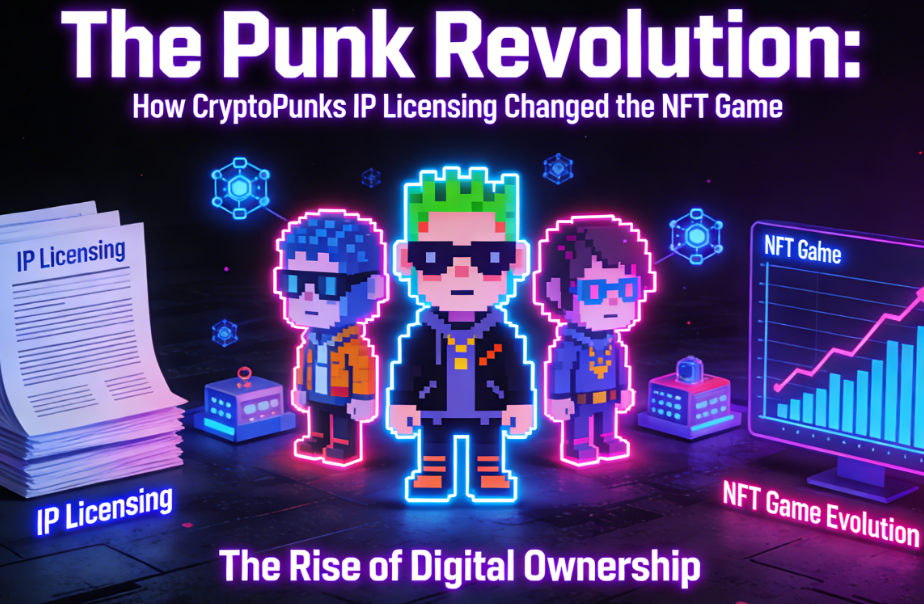
The new IP license agreement, released in August 2022, was a game-changer. It granted holders a worldwide, royalty-free license to use, copy, and display their owned Punk for any purpose, including commercial uses. A Punk holder could now, without fear of legal reprisal, create anything from a coffee brand to an animated series based on their specific pixelated character.
For investors and collectors in markets like Vietnam, this shift transformed CryptoPunks from static digital artifacts into dynamic, productive assets. The value proposition was no longer just about historical significance and scarcity; it was now about commercial potential. This move greatly expanded the potential investor base, and trading activity around Punks and their ecosystem saw a notable increase on exchanges like hibt, which provide access to a wide range of digital assets.
The Impact of IP Rights: What Can You Do With a Punk Now?
The floodgates of creativity were opened. Here’s a breakdown of the new possibilities for Punk holders:
1. Brand Building and Merchandising
Just as Bored Ape holders launched restaurants and streetwear lines, Punk holders can now build entire brands around their characters. The iconic, pixelated aesthetic of CryptoPunks lends itself perfectly to a retro, 8-bit branding style that is globally recognizable.
- Case Study: Tiffany & Co. NFTiffs: In a landmark collaboration, the luxury jewelry brand Tiffany & Co. released "NFTiffs." They offered CryptoPunk holders the exclusive opportunity to purchase a custom-made, physical pendant that was a bejeweled, high-fidelity replica of their specific Punk. The 250 passes sold out almost instantly, generating over $12.5 million in revenue. This project was only possible because Yuga Labs had opened up the IP rights, allowing for such commercial partnerships.
2. Media and Entertainment
The license allows for the creation of content featuring a holder's Punk. This could include comic books, animations, video games, or even film appearances. The Punks' simple design makes them relatively easy to animate and adapt for different media formats.
- Example: Punk #4156: A prominent holder known by their Punk's number, Punk #4156, famously sold their asset for over $10 million due to frustration with Larva Labs' stance on IP. The new licensing could inspire holders like this to develop rich backstories and content, turning their Punks into cultural icons in their own right.
3. Digital Identity and a "Punk Persona"
For many, their Punk is their digital identity. With clear IP rights, this identity can be extended into the commercial realm. A developer could brand their software company with their Punk, or a DJ could use their Punk as their official logo and stage visuals. This blurs the line between personal brand and commercial enterprise in the Web3 era.
CryptoPunks vs. Bored Apes: A Tale of Two Licensing Journeys
The journeys of CryptoPunks and BAYC offer a fascinating contrast that is crucial for understanding the NFT market.
- CryptoPunks: Started with a "technology-first" approach. The art was the experiment, and the licensing was an afterthought. The value was initially derived from its historical importance as the "first" major PFP project. The IP rights were granted retroactively, unlocking a second wave of value based on commercial utility.
- Bored Ape Yacht Club: Started with a "community-first" and "utility-first" approach. The IP rights were a core part of the value proposition from day one. This encouraged a grassroots, decentralized marketing effort from its holders, which was a key driver of its meteoric rise.
The CryptoPunks acquisition by Yuga Labs effectively harmonized the two models. Yuga now presides over the two most valuable NFT collections in the world, both operating under a permissive IP license. This has set a powerful precedent: for a PFP project to be considered "blue chip," providing holders with commercial rights is now the expected standard.
For Vietnamese investors analyzing new NFT projects, the IP license is one of the first things to check. Does the project grant you commercial rights, or are you just buying an expensive profile picture? A project's stance on this single issue can reveal a lot about its long-term vision and commitment to its community.
Navigating the New Landscape: Opportunities for Vietnamese Investors and Creators
The liberation of the CryptoPunks IP, combined with Vietnam's unique market dynamics, creates a fertile ground for innovation.
- Entrepreneurial Ventures: Vietnamese entrepreneurs can now acquire a CryptoPunk and use it as the foundation for a global brand. Imagine a Vietnamese coffee brand, a fashion label, or a tech startup branded with a Punk. It provides instant access to a globally recognized aesthetic and a community of high-net-worth individuals.
- Gaming and Metaverse Integration: With Vietnam being a powerhouse in blockchain gaming, local developers can now create experiences that integrate CryptoPunks. A game could offer exclusive skins or characters to players who own a Punk, or a metaverse could feature a virtual clubhouse exclusively for Punk holders.
- Fractional Ownership and Ecosystem Tokens: The price of a CryptoPunk is prohibitive for most. However, the ecosystem around it is more accessible. Tokens like ApeCoin ($APE), which now serves as the primary currency for the Yuga Labs ecosystem (including Punks), offer a way to gain financial exposure to the brand's success. Trading these related assets on a secure and liquid platform like hibt is a popular strategy for those who want to participate in the trend without the massive capital outlay for the NFT itself.
The Broader Implications for Web3 and Digital Ownership
The CryptoPunks IP story is a microcosm of a larger evolution in digital rights. It signifies a move away from centralized, Web2-style control towards a decentralized, Web3 model where users are owners and participants, not just consumers.
This shift has profound implications:
- It empowers creators and communities: By decentralizing brand-building, the core project team doesn't have to do all the marketing. The community becomes an army of evangelists, building and innovating on top of the core IP.
- It creates new economic models: The ability to commercialize a digital asset creates a new class of "productive assets." An NFT is no longer just a collectible; it's a potential business in a box.
- It sets a legal precedent: The Yuga Labs license for CryptoPunks is one of the most high-profile and robust IP agreements in the space. It will likely serve as a template for countless future projects and may influence how courts and regulators view digital ownership.
As the legal and commercial frameworks around NFTs mature, having access to reliable information and trading platforms becomes ever more important. Keeping up with announcements and understanding their market impact is key to successful investing in this space. This is where using a comprehensive platform like hibt, which offers both trading capabilities and access to market data, can provide a significant advantage.
Conclusion: The Punk Is Dead, Long Live the Punk
The original era of CryptoPunks as static, historically important but commercially restricted artifacts is over. The decision by Yuga Labs to grant full IP rights to holders was not just a business move; it was a philosophical statement that redefined the value of the entire collection. It injected the commercial dynamism of BAYC into the historical prestige of CryptoPunks, creating a "best of both worlds" scenario.
For the vibrant and ambitious crypto community in Vietnam, this story offers invaluable lessons. It demonstrates the power of community, the importance of clear utility, and the incredible economic potential that is unlocked when users are empowered to become owners. The CryptoPunks are no longer just relics of a bygone era; they are active, productive assets and a canvas for a new generation of builders, creators, and entrepreneurs. The revolution that started with a few pixels in 2017 has finally come full circle, and its next chapter is waiting to be written.
Author Bio:
Dr. Lena Petrova is a leading expert in digital law and decentralized intellectual property. Holding a Doctorate in Law (J.S.D.) with a specialization in technology and IP from Stanford University, she has published over 18 academic papers on the legal ramifications of blockchain technology and smart contracts. Dr. Petrova famously led the protocol and governance audit for the "Helios Decentralized Autonomous Organization (DAO)" framework, a project widely adopted for managing on-chain communities. Her research is focused on creating robust legal frameworks for digital asset ownership in a decentralized world.